What Does a Music Publisher Actually Do? (Plain-English Breakdown)
Most songwriters know they “need a publisher” but don’t really know what a publisher does. This plain-English guide breaks down what music publishers actually do all day - and how good administration can uncover royalties you didn’t know you were missing.
Most songwriters hear they “need a publisher,” but very few people can clearly explain what a music publisher actually does.
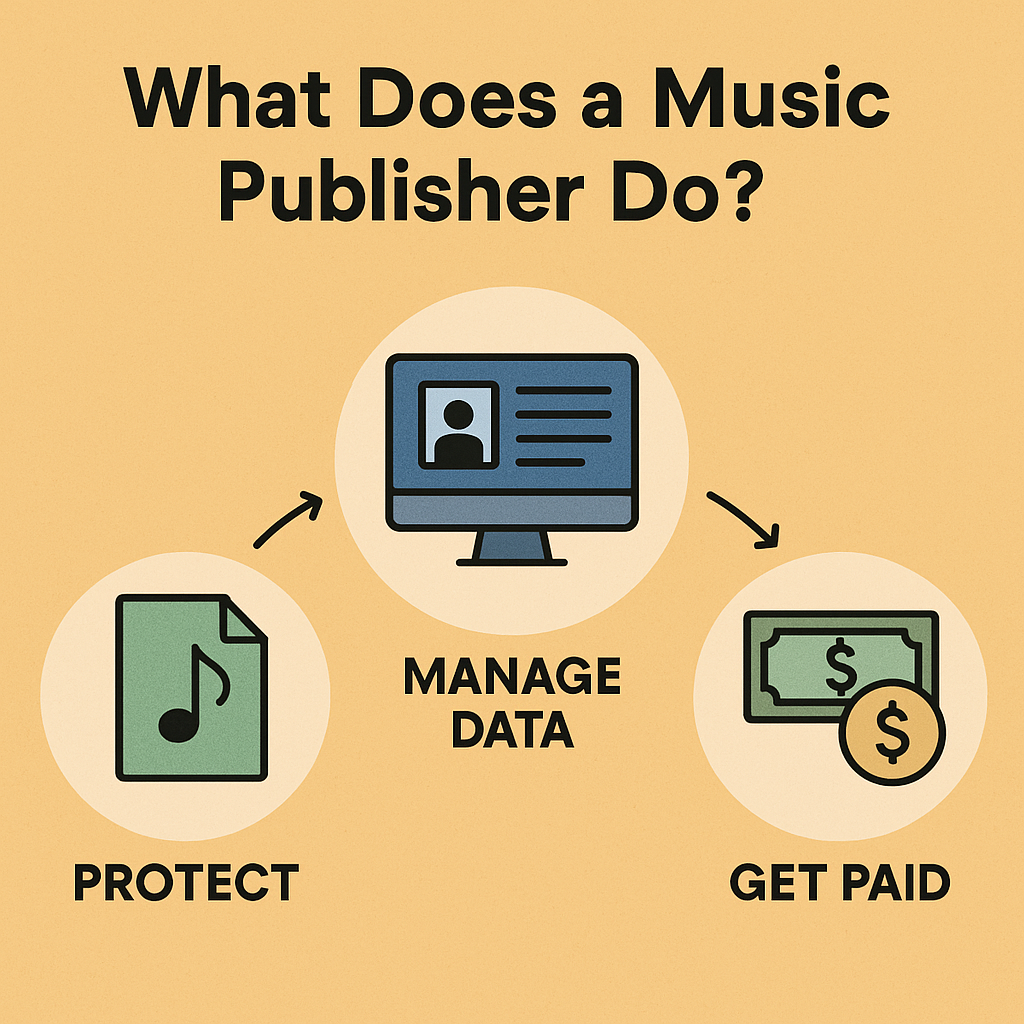
In simple terms, a music publisher’s job is to protect your songs, manage your data, and make sure you get paid every time your music is used. That sounds basic, but in reality it’s a lot of detailed work happening in the background.
If you’re not fully sure what publishers do, you’re not alone. Let’s break it down step by step.
The Core Job: Protect the Song and Get It Paid
Music publishing is about the song itself (the composition), not the sound recording.
A publisher or publishing administrator:
Makes sure your songs are properly registered
Keeps your song information (metadata) clean and accurate
Tracks where your music is being used around the world
Collects royalties from many different sources
Pays you (and/or your company) your share
If you want a refresher on the basics of publishing, you can also read:
What Is Music Publishing? A Simple Guide for Songwriters.
Step 1: Registering Your Songs
The first thing a publisher does is register your songs with the right organizations. If your songs aren’t registered correctly, most royalties will never find their way to you.
This can include:
Performing Rights Organizations (PROs) like ASCAP, BMI, SESAC, SOCAN, etc.
Mechanical royalty organizations (e.g. The MLC in the U.S.)
International societies and databases
YouTube and other digital platforms (directly or through partners)
For each song, the publisher will typically register:
Title(s) and alternate titles
Songwriters and their shares
Publisher(s) and their shares
Identifiers (ISWC, internal work IDs, etc.)
Good registration is like giving your song a passport so it can be recognized and paid worldwide.
Step 2: Managing Data and Metadata
Every song you release lives in multiple databases across the world. If the information doesn’t match, money can get stuck or misdirected.
A publisher spends a lot of time on:
Fixing misspelled names
Correcting wrong splits
Handling new versions and translations of songs
Making sure writer and publisher information is consistent
Matching songs to recordings and videos
Dispute incorrect matches from other parties
It’s not glamorous, but clean data = more money actually reaching you.
Step 3: Tracking and Collecting Royalties
Once your songs are registered and the data is in good shape, the next big job is collecting money from many different sources.
Here are some of the main income streams a publisher will help with:
Performance Royalties
Generated when your song is:
Streamed online
Played on radio
Performed live
Used on TV or in public spaces
These are usually collected by PROs (like ASCAP or BMI) and then shared with songwriters and publishers.
Mechanical Royalties
Generated when your song is:
Streamed on services like Spotify and Apple Music
Sold as a download
Pressed on CD or vinyl
In the U.S., digital mechanicals often flow through organizations like The MLC. In other countries, different societies handle this.
Sync and YouTube Royalties
Generated when your song is used with video, such as:
TV shows and films
Ads and trailers
Games
Social media and online videos
YouTube
This includes synchronization royalties (sync for short) and, on YouTube, some highly specific publishing royalties that many publishers don’t fully understand or collect.
A good publisher:
Makes sure there’s a license (where needed)
Tracks those uses
Collects the sync and related royalties
Ensures you’re paid your share
CHOIS MUSIC has a particular expertise on collecting YouTube publishing royalties, including a lesser-known royalty stream often referred to as YouTube synchronization royalties, which many catalogs around the world do not always collect.
Step 4: Accounting and Paying Out
Once royalties are collected, a publisher or administrator will:
Combine income from many different sources
Match it back to the correct songs and songwriters
Deduct agreed admin fees or commissions
Provide statements and payments on a regular schedule
Handle tax-withholding and exchange rate conversions.
Good accounting should be:
Transparent – You can see which songs earned what.
Consistent – Regular statements, not random emails.
Explained – Someone can walk you through what everything means.
Step 5: Creative and Career Support (With Some Publishers)
Some publishers also offer creative services, such as:
Pitching songs to artists, labels, or music supervisors
Helping set up co-writes and writing camps
Giving feedback on songs and catalogs
Helping develop your career as a songwriter
Other companies, like CHOIS MUSIC focus more on the administration and royalty collection side, especially for existing catalogs and publishers who already have creative operations in place.
Admin Publisher vs. Creative Publisher
It can be helpful to know the difference between:
Creative Publisher
Focuses on pitching, placements, co-writes, and song opportunities
Often signs writers to publishing deals that may include advances
May handle administration too, but it isn’t always their main strength
Administrative Publisher (Admin)
Focuses on registrations, data, and royalty collection
Works with writers, catalogs, and other publishers who need back-end support
Often deals with complex or neglected income streams (like certain types of YouTube money)
Many professional catalogs work with an admin specialist even if they already have a creative publisher, because the admin side is so technical and global.
Why Many Publishers Still Miss Money (Especially on YouTube)
Even with a publisher involved, it’s common for catalogs to miss income due to:
Incomplete registrations in certain territories
Older works that were never properly updated
Complex rights situations (co-publishing, sub-publishing, etc.)
Confusion between Content ID revenue and publishing revenue
A lack of focus on specific digital income streams like YouTube’s unique publishing royalties
This is where specialist administrators step in - to audit, clean up, and collect.
CHOIS MUSIC focuses heavily on this side, especially around YouTube publishing and synchronization royalties that many publishers either don’t understand or don’t have the systems to chase.
When Do You Actually Need a Publisher?
You might benefit from a publisher or admin company if:
Your songs are getting streams, views, or uses in different countries
Your music is frequently used on YouTube or in user-generated videos
You’re getting PRO statements but feel like “this can’t be everything”
You’ve signed deals in multiple territories and struggle to keep track of them
You simply don’t have time (or desire) to deal with registrations and royalty flows
If your music is actually moving out in the world, having a professional manage the publishing side usually means:
More of your money collected
Fewer headaches
Less guesswork about what’s missing
Final Thoughts
A music publisher doesn’t just “take a cut.” At least, they shouldn’t.
Their real job is to:
Register and protect your songs
Keep your data accurate
Track and collect royalties from around the world
Pay you transparently and on time
Help you unlock income you might never see on your own
If you’re a songwriter, catalog owner, or music publisher who suspects there’s more money out there - especially on platforms like YouTube - it may be time to work with a specialist administrator who lives in that world every day.
To learn more about what CHOIS MUSIC does on the administration side, visit CHOISMUSIC.COM and explore how we help rights-holders collect the royalties they’re entitled to.